Easy Family Bonding: Printable Activities + Checklist
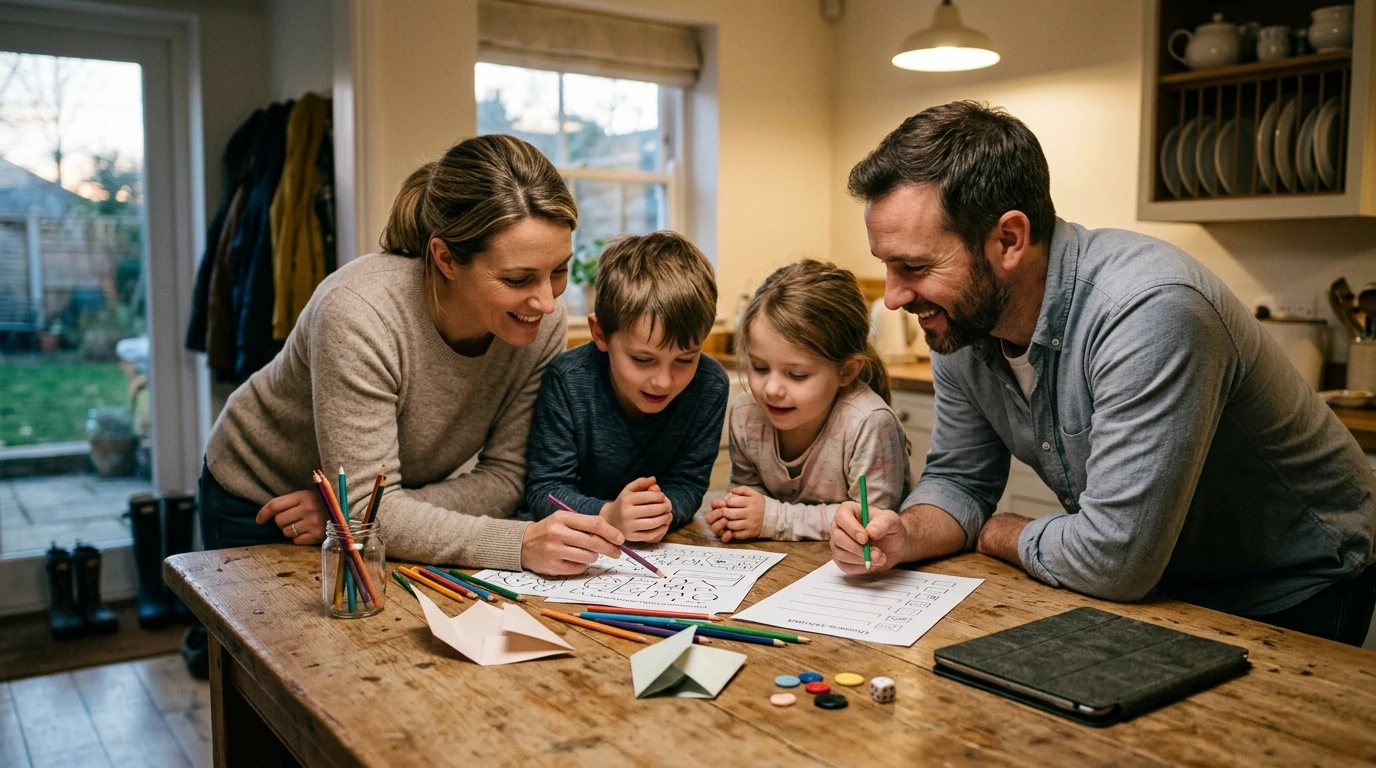
Stronger Together: Easy Family Connection, Without Complicated Planning
Busy schedules, screens, and everyday stress can make quality time feel like “one more thing” to manage. A simple, reusable routine helps more than a perfect plan. Stronger Together: Family Bonding Pack is a digital download designed to make connection easier with printable activities for kids and parents, options for indoors and outdoors, and a family time checklist that supports follow-through—without a lot of prep.
Whether you have 10 minutes after dinner or a whole Saturday afternoon, the goal is the same: small rituals that add up to stronger bonds over time.
What the Family Bonding Pack Includes
- Digital download designed for parents and kids to use together
- Printable activity prompts for at-home connection (quick, low-prep options)
- Outdoor connection activities to encourage movement and shared experiences
- Family time checklist to turn good intentions into a routine
- eBook-style guidance to help pick activities based on time, energy, and setting
Many families find it easier to stay consistent when choices are already made and visible. That’s the advantage of a printable pack: instead of brainstorming on the spot, you pick a prompt and start.
Who It’s Great For
- Families wanting easy, screen-light activities that still feel fun
- Parents who prefer guided prompts over inventing ideas on the spot
- Kids who enjoy variety: talking games, mini challenges, creativity, and teamwork
- Caregivers looking for predictable routines (weeknights, weekends, holidays)
- Families with mixed ages who need flexible activities that can be simplified or extended
If your household is working on healthier media habits, the American Academy of Pediatrics’ media guidance is a helpful reference for building balanced routines—especially when you want more connection without power struggles.
At-Home Connection Ideas (Quick Wins for Weeknights)
Weeknights are where routines either stick or disappear. The most useful family activities are the ones that work when everyone is tired. The pack’s at-home options are designed for 5–15 minute “connection starters” that fit naturally after school, after dinner, or right before bed.
- Conversation prompts that move beyond “How was your day?”
- Teamwork mini-challenges that build cooperation (without competition pressure)
- Creative moments that don’t require special supplies (paper, pencils, household items)
- Calm-down and reset activities that work well during emotional days
At-home activity formats and when to use them
| Format | Best time | What it supports |
|---|---|---|
| Conversation prompts | Dinner or bedtime | Listening skills, emotional awareness |
| Mini challenges | After school | Teamwork, problem-solving |
| Creative prompts | Quiet afternoons | Self-expression, confidence |
| Calm connection | High-stress moments | Co-regulation, reassurance |
| Family routine checklist | Weekly planning | Consistency, follow-through |
Outdoor Connection Activities (Low-Cost, High-Impact)
Outdoor time doesn’t have to mean a big outing. A walk around the block, backyard time, or a quick park visit can become meaningful when there’s a shared goal or a prompt that sparks conversation.
- Simple outdoor prompts that turn a walk, park visit, or backyard time into shared play
- Observation-based activities that encourage curiosity and conversation
- Cooperative games that focus on shared goals rather than winning
- Season-friendly ideas that can be adapted for different weather
- Ways to include older kids (leadership roles, planning, “challenge creator” prompts)
When kids “serve” with an idea and adults “return” with attention, it supports healthy connection and communication. For a deeper explanation of this concept, Harvard’s Center on the Developing Child summarizes it well in their overview of serve-and-return interactions.
How to Use the Checklist to Make Family Time Happen
Motivation is unreliable; systems work better. The checklist is meant to make family time visible and easy to repeat.
- Choose a realistic cadence (example: 2 short weeknight activities + 1 weekend activity)
- Keep printed pages in a visible spot (fridge, family command center, binder)
- Let kids help select activities to boost buy-in and reduce resistance
- Use the checklist as a gentle tracker, not a scorecard
- Create a “fallback plan” list for low-energy days: pick 1–2 easiest activities
If you want additional guidance on age-appropriate routines and supportive boundaries, the CDC’s Positive Parenting Tips can complement a checklist-based approach.
Making It Work for Different Ages and Family Dynamics
The most sustainable family routines are flexible. Instead of trying to make everyone enjoy the same thing in the same way, the pack’s prompts can be scaled up or down.
Digital + Printable Benefits: Small Rituals, Stronger Bonds
For families also building stronger day-to-day systems, pairing connection time with practical skill-building can be a powerful combination. Essential Adult Skills Guide supports communication and life management habits that make home routines smoother. And if shared wellness goals are part of your family reset, Fuel Your Life: The Ultimate Healthy Eating Starter Bundle can help structure meal planning and healthier choices alongside family rituals.
What to Expect After a Few Weeks of Consistent Use
FAQ
Is this suitable for multiple kids of different ages?
Yes. The prompts are flexible, so you can simplify them for younger kids or extend them for older kids. Assigning roles (leader, helper, timekeeper, “challenge creator”) helps everyone participate without needing separate activities.
Do the activities require special supplies or a lot of prep?
No. Most at-home activities use basic supplies like paper and pencils, plus common household items. Outdoor options focus on what you can observe and do in your environment rather than needing equipment.
How often should families use the checklist and activities?
A realistic goal is 2–3 times per week, such as two short weeknight activities and one weekend activity. For busy weeks, use a fallback plan with your easiest prompts so the routine stays consistent.












Leave a comment