New Kitten Feeding Guide: Best First Foods & Schedule
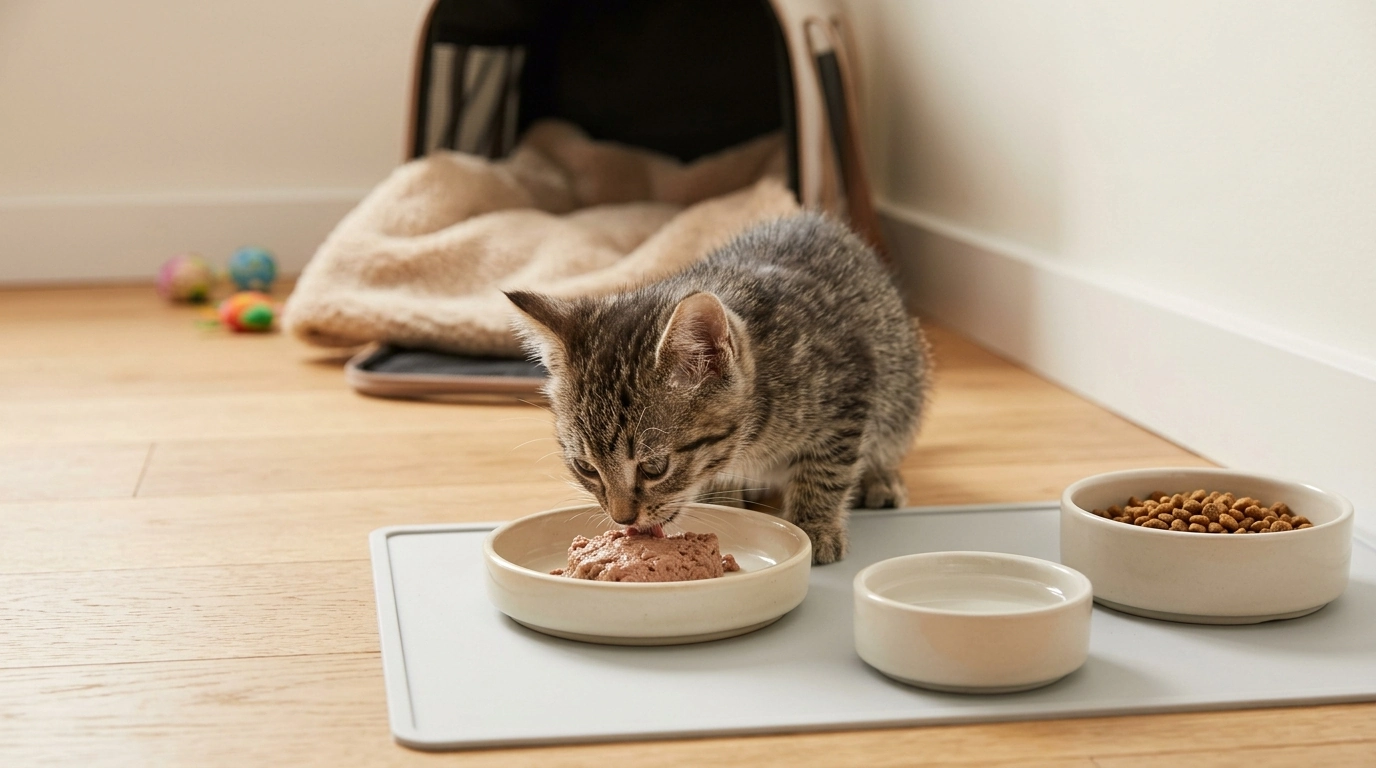
Feeding Your New Kitten Right: What to Start With for Healthy Growth and Happy Mealtimes
A new kitten’s first weeks at home are a nutrition growth sprint: rapid development, tiny stomach capacity, and big energy needs. The right starter foods, a predictable meal rhythm, and gradual changes can support steady weight gain, strong bones, and comfortable digestion—while keeping mealtimes calm and consistent.
The first decision: keep the current diet stable, then improve it slowly
The smoothest start usually comes from continuity. If possible, ask the breeder, shelter, or foster what your kitten was eating (brand, flavor, wet vs. dry) and match it for the first 7–10 days. A sudden change is one of the most common triggers for loose stool, gas, or food refusal—especially when a kitten is also adjusting to a new home.
Plan one change at a time: first help your kitten settle in, then adjust food type or brand, and only then fine-tune the schedule and portions. If the previous diet is unknown, begin with a complete-and-balanced kitten food and watch stool quality and appetite closely during the first week.
What food to start a new kitten on
Start with a complete-and-balanced food labeled for “growth” or “all life stages” (a kitten-specific formula is ideal). These diets are designed for the higher protein, fat, and mineral needs that fuel healthy development.
If your kitten is under about 8 weeks old—or not fully weaned—kitten milk replacer (not cow’s milk) may be needed under veterinary guidance. Cow’s milk often causes diarrhea because many cats don’t digest it well.
For most newly adopted kittens (8–16+ weeks), a high-quality wet kitten food is a practical starting point because it’s aromatic, easy to chew, and supports hydration. If you’d like convenience and texture variety, add a measured amount of kitten dry food later (introduced gradually).
For hesitant eaters, offer wet food warmed slightly above room temperature and serve it in a quiet corner away from foot traffic. Let the kitten approach the bowl on their own—avoid chasing them with food, which can increase stress and reduce appetite.
Homemade diets are best avoided unless formulated by a veterinary nutritionist; small imbalances can affect bone growth and long-term health. For label and adequacy basics, resources like AAFCO consumer information can help you understand what “complete and balanced” means.
Wet vs. dry for kittens: practical pros and how to combine them
Wet food supports hydration and is often easier for small mouths, which can be especially helpful for shy or stressed kittens that need encouragement to eat. Dry food is convenient for measured portions and works well in puzzle feeders, but it’s calorie-dense—so portions matter.
A mixed approach is often easy to sustain: scheduled wet meals for reliability and hydration, plus a small measured dry snack for enrichment. If you mix formats, keep the primary diet consistent and introduce the second format slowly to reduce the chance of digestive upset.
How often to feed: meal frequency by age and appetite cues
Young kittens need more frequent meals because their stomachs are small and their energy needs are high. Predictable mealtimes also support litter box routine and gentle training. When adjusting intake, focus on growth trend, body condition, and stool quality—not “empty bowl” behavior alone.
Starter Feeding Rhythm for Kittens (general guidance)
| Kitten age | Meals per day | Best starting format | Notes |
|---|---|---|---|
| 4–8 weeks (weaning) | 4–6 small meals | Wet kitten food slurry + kitten milk replacer if needed | Wean gradually; monitor hydration and stool |
| 8–12 weeks | 4 meals | Wet kitten food; optional small dry portion | Prioritize calories and protein; keep changes slow |
| 3–6 months | 3 meals | Wet + measured dry or wet-only | Growth is rapid; reassess portions every 2–4 weeks |
| 6–12 months | 2–3 meals | Wet + measured dry or wet-only | Transition toward adult routine while maintaining kitten formula until maturity |
Essential kitten nutrition: what matters most on the label
Core priorities for kittens include animal-based protein, enough fat for energy, and balanced calcium/phosphorus for bone development. Taurine is essential for cats and must be present at appropriate levels for heart and eye health. Ingredient buzzwords can be misleading; adequacy statements and reputable formulation standards matter more. For practical, veterinary-focused guidance, the WSAVA Global Nutrition Guidelines and the Cornell Feline Health Center are helpful references.
Portion size without guesswork: monitoring growth and body condition
Changing foods safely: a gentle 7–10 day transition plan
Common feeding challenges (and gentle fixes)
Food refusal
Soft stool
Fast eating
Milk and table scraps
When to talk to a veterinarian sooner rather than later
A step-by-step plan for confident mealtimes
If you want a day-to-day reference for starter foods, schedules, transitions, and troubleshooting during the first months, see Feeding Your New Kitten Right: Essential Kitten Nutrition eBook.
More helpful downloads from our shop
FAQ
What is the best food to start a new kitten on?
A complete-and-balanced kitten diet labeled for growth (or all life stages) is the best starting point, with wet food often helping appetite and hydration. If you know what your kitten ate before coming home, keep that diet steady for 7–10 days and transition slowly.
How often should a kitten eat each day?
Most kittens do best with more meals when younger (about 4 meals/day at 8–12 weeks), then fewer as they mature (about 2–3 meals/day by 6–12 months). Keep mealtimes consistent and adjust portions based on growth and body condition.
How do you switch kitten food without upsetting their stomach?
Transition gradually over 7–10 days by mixing increasing amounts of the new food with the old. If vomiting, diarrhea, or appetite loss occurs, slow down and contact a veterinarian if symptoms persist.











Leave a comment