Indoor Cat Enrichment: DIY Toys, Play Routines & Home Tips
What “enrichment” means for indoor cats
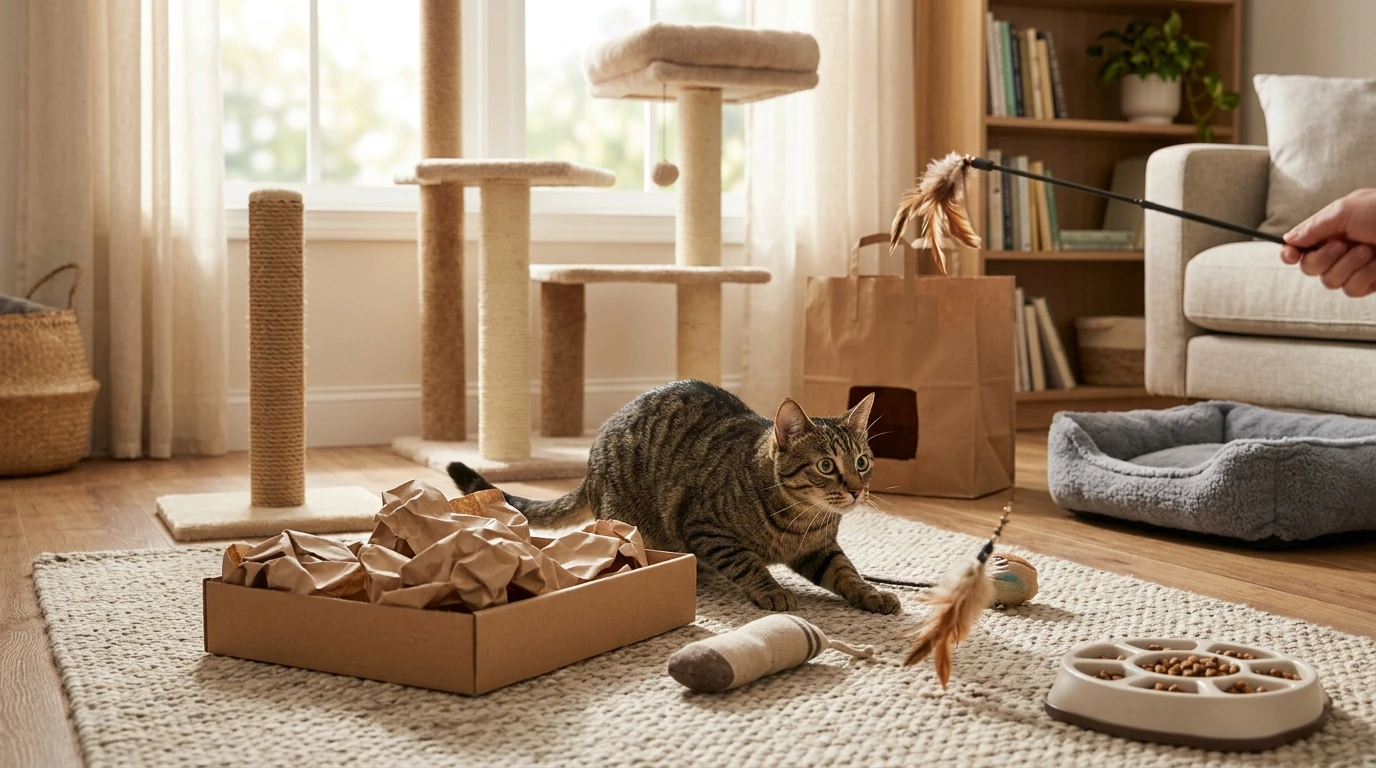
Enrichment is anything that helps an indoor cat express natural behaviors in safe, satisfying ways. Think of it as meeting daily needs to hunt, climb, scratch, chew, scent-mark, explore, and rest without feeling trapped or bored.
Common signs an indoor cat needs more stimulation include excessive meowing, relentless attention-seeking, destructive scratching, obsessive food behavior, or retreating to hide more than usual. Some cats show “busy brain” stress through overgrooming or sudden nighttime zoomies.
The goal isn’t constant activity—it’s balance. Pair short bursts of hunting-style play with predictable calm zones so your cat can settle and feel secure. Instead of buying more items, rotate what you already have; novelty is often what drives engagement.
A simple daily play routine that fits real life
Most households do better with short, consistent sessions than with one long marathon. Aim for 2–3 play blocks per day (about 5–12 minutes each), adjusted for your cat’s age, health, and energy level.
Use the complete “hunt cycle”
Try to follow the sequence your cat’s brain is built for: stalk → chase → pounce → “catch” → eat/groom → rest. A small snack or a portion of the next meal after play helps the session feel complete and can reduce frustration.
- Morning: a quick wand-toy “hunt” to take the edge off early energy.
- Evening: a slightly longer session to reduce overnight chaos.
- Clear finish: put the toy away and offer a treat so your cat knows the “hunt” is over.
- Adjust by life stage: kittens often need more frequent bursts; seniors usually prefer slower, ground-level “prey” movements.
| Time | Activity | Goal | Notes |
|---|---|---|---|
| AM (5–10 min) | Wand toy + 3–5 treats afterward | Energy release and “successful hunt” | Keep the toy moving like prey; let the cat win several times |
| Midday (2–5 min) | Food puzzle or scatter feeding | Mental work and slower eating | Use part of daily kibble or tiny treats |
| PM (8–12 min) | Chase + kicker toy + calm petting | Bonding and stress reduction | Finish with a snack and a cozy nap spot |
DIY toys from safe household items
DIY enrichment works best when it’s simple, supervised, and made from materials your cat can’t swallow or shred into strings. Inspect often and replace at the first sign of tearing.
- Cardboard “forage box”: place crumpled paper in a shallow box and sprinkle a few treats for sniff-and-dig fun.
- Toilet-paper-roll puzzle: fold one end, add a few kibble pieces, fold the other end, then let your cat bat it around (supervise until the rules “click”).
- Paper-bag hideout: remove handles, lay the bag on its side near a wall for a secure tunnel with satisfying rustle sounds.
- Sock kicker: fill a sock with fabric scraps and tie off tightly; avoid yarn, ribbons, or loose parts and supervise play.
- Ice-cube “hockey”: in a tub or shower, slide a plain-water ice cube for batting and chasing; dry the area afterward.
Turn meals into enrichment (without changing food)
Food is a powerful daily tool for indoor cat enrichment. The trick is to transform the same amount of food into a little “work” so your cat gets movement and problem-solving practice.
- Puzzle feeders: use store-bought puzzles or simple DIY options to slow eating and build focus.
- Micro-hunts: hide 5–10 single kibble pieces in easy spots (beside a chair leg, on a mat), then gradually increase difficulty as your cat succeeds.
- Wet food on a lick mat: smear a thin layer to slow meals and encourage calming licking behavior.
- Prevent frustration: start easy—your cat should “win” quickly at first.
- Weight management: measure the day’s portion, then allocate part of it to games so calories stay consistent.
Cat-friendly home setup: vertical space, scratch zones, and calm hideaways
A cat-friendly home doesn’t need to be large—it needs to be layered. Vertical territory (cat trees, sturdy shelves, window perches) increases usable space and creates safe observation points.
For deeper guidance on environmental setup, the American Association of Feline Practitioners (AAFP) Feline Environmental Needs Guidelines and International Cat Care’s enrichment overview are excellent references.
Rotate activities with a weekly “menu”
Common problems and quick fixes
Printable guide to keep routines consistent
If you want a ready-to-use plan, see the Printable cat enrichment guide with DIY toys and play routines, designed to make daily play, meal enrichment, and weekly rotations easy to stick with.
For households that benefit from a consistent evening wind-down (and to reduce sudden nighttime activity), a gentle ambient light can help keep routines steady without harsh overhead lighting. The Retro Horse LED Lantern is a simple option for a soft, calm corner near a reading chair or feeding area.
FAQ
How much play does an indoor cat need each day?
Many indoor cats do well with about 15–30 minutes total per day, split into short sessions. Adjust up for energetic young cats and down for seniors, and try to end play with a small snack to complete the “hunt cycle.”
Are DIY cat toys safe?
They can be safe when you supervise and choose sturdy materials. Avoid strings, rubber bands, small detachable pieces, toxic glues, and anything your cat could swallow; inspect DIY toys often and replace them when worn.
What are the easiest enrichment ideas for a busy schedule?
Quick wins include a 5-minute wand-toy session, scatter feeding part of a meal, a cardboard forage box, scheduled window-perch time, and rotating two toys each day to keep novelty high.











Leave a comment